
- Introduction
- Curriculum and Education
- Campus Culture and Student Life
- Community Engagement
- Digitisation
- Energy Conservation
- Green Spaces
- Health and Wellbeing
- Our Commitment to Net Zero by 2050
- Partnerships and Collaboration
- Sustainable Transportation
- Sustainable Events and Conferences
- Social Sustainability and Equity
- Waste Reduction
- Water Conservation
UCSI and Sustainability
UCSI University is deeply committed to sustainability, considering it a fundamental purpose woven into every aspect of their institution. We aim to lead by example in creating a sustainable world through education, research, and action. Besides ensuring equality and harmonious communities,the university also focuses on minimising its ecological footprint through energy-efficient campus operations, renewable energy sources, waste reduction, and water conservation initiatives.
The curriculum is designed to empower students across different disciplines with the knowledge and skills to address complex sustainability issues. UCSI actively engages with the community and industry partners to promote sustainability beyond their campus and acts as a catalyst for change.
The university is dedicated to conducting research and training that benefit industries and align with environmental, social, and governance (ESG) factors. We actively promote sustainability in various areas of university life and collaborate with organisations to achieve global sustainability goals.
UCSI University is proud to be a designated smoke-free campus, prohibiting the use of cigarettes, vapes, and electronic cigarettes in all areas. This policy is in place to safeguard the health and comfort of our students, academics, and visitors, ensuring a clean environment that is fully supportive of academic excellence and personal well-being.
Sustainability development and advancement at the University is governed and administered by:
The UCSI Oversight Task Force, also known as the Sustainability Oversight
Task Force, is a body within the UCSI Group responsible for reviewing and
overseeing the organisation’s sustainability initiatives and progress. Its primary
role is to evaluate the sustainability reports submitted by all subsidiaries and
departments of the UCSI Group, which are due annually. These reports cover
various areas such as campus operations, projects and events, social initiatives,
academic activities, and research.
The task force is tasked with suggesting improvements and providing support
to enhance the progress of these initiatives. By doing so, it contributes to the
organisation’s overall sustainability efforts and ensures that the UCSI’s
operations align with the principles of sustainable development and the SDGs
set by the United Nations.
The UCSI University SDG Steering Committee is a body within the
Institution that is dedicated to promoting and implementing the
United Nations’ SDGs within the University’s operations, research,
and training. The committee is responsible for developing strategies,
policies, and an annual operating plan that align with environmental,
social, and governance (ESG) factors.
The committee’s activities are diverse and encompass a wide range
of sustainability initiatives. For instance, it organises events related
to sustainable development, in collaboration with various
departments and companies within the UCSI Group.
The committee also encourages student involvement in
sustainability initiatives, providing them with leadership experience
under various focus areas. Furthermore, the committee provides
technical advice and ensures the financial sustainability of the
Secretariat Office, which is likely involved in coordinating and
supporting the committee’s activities.
The UCSI Group Sustainability Office (GSO) is a department within the UCSI Group that is responsible for developing,
overseeing, and implementing sustainable policies and practices within the organisation.
The GSO’s principal objective is to promote Environment, Social, and Governance (ESG) principles and continually improve
and set higher standards in these three vital areas. The office focuses on environmental impact, including carbon emissions
and energy efficiency, social responsibility, and corporate governance.
The GSO’s activities are aligned with the SDGs set by the United Nations. The office prioritises sustainable practices in
campus operations, focusing on energy conservation, waste management, water efficiency, and digitisation.
UCSI has been governing with sustainability in mind, crafting policies to address pertinent issues, and establishing
guidelines to steer its community towards a more sustainable future.
Among these policies are the:
Sustainability Policy
https://www.ucsiuniversity.edu.my/sites/default/files/ucsi_sustainability_policy.pdf
Anti-Bribery and Anti-Corruption Policy
https://www.ucsiuniversity.edu.my/sites/default/files/anti-bribery_and_anti-corruption_policy.pdf
Equality, Diversity and Inclusion Policy
https://www.ucsiuniversity.edu.my/sites/default/files/equality_policy.pdf
Health and Safety Policy
https://www.ucsiuniversity.edu.my/sites/default/files/health-and-safety-policy.pdf
Sexual Harassment Policy
https://www.ucsiuniversity.edu.my/sites/default/files/sexual_harassment_policy.pdf
Code of Conduct Policy
https://www.ucsiuniversity.edu.my/sites/default/files/code_of_conduct.pdf
Transforming the Curriculum for a Sustainable Future
UCSI University integrates sustainability into its curriculum across disciplines. Sustainability-related courses, programmes and majors equip students with the knowledge and skills to address environmental challenges. Interdisciplinary learning helps them understand how the environmental, social and economic dimensions of sustainability are connected.
The University’s Academic Management Office is committed to embedding Education for Sustainable Development (ESD), the United Nations Sustainable Development Goals (SDGs) and Values-Based Education (VBE) throughout the curriculum, in line with the Malaysian Qualifications Framework (MQF), Second Edition.
These principles inform curriculum design, teaching and learning, assessment and authentic student experiences. Students are encouraged to consider the social, environmental, economic and ethical implications of their disciplines and recognise how they can contribute positively to society.
Curriculum transformation supports the development of sustainability competencies, responsible decision-making and ethical awareness. It also helps students translate global challenges into meaningful local action.
All new students are introduced to sustainability concepts and practices during orientation. Alongside dedicated sustainability courses, all other courses incorporate sustainability elements. Every course project must support and promote at least one of the United Nations’ 17 Sustainable Development Goals. Training entitled “Sustainability and ESG – What Every University Student Should Know” is offered several times each semester.
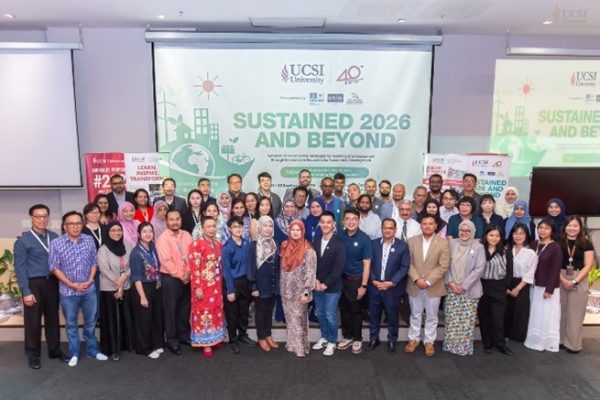
ESD symposium
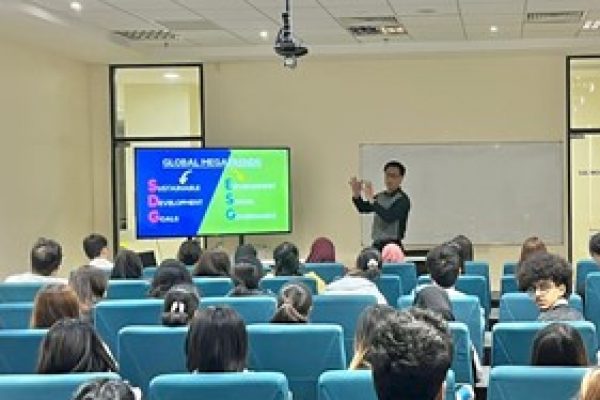
Lecture in session

Reforestation project
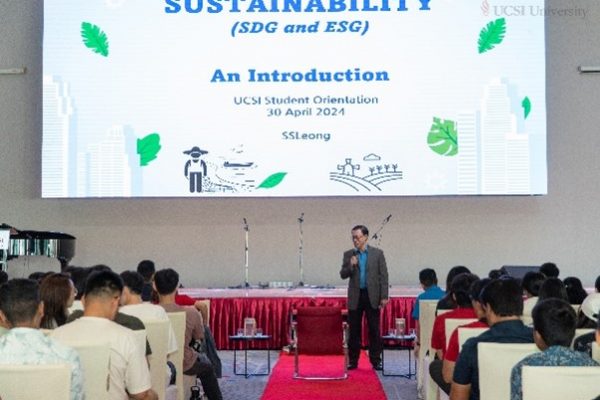
Students orientation
Campus Culture and Student Life
Sustainability is ingrained in our campus culture and student life. We promote sustainable behaviours and encourage students to adopt eco-friendly practices in their daily lives. Student-led sustainability organizations and clubs play a vital role in driving sustainability initiatives, organising awareness campaigns, and implementing projects that create a positive impact on and off campus.
World Environment day


Community Engagement
We actively engage with the local community, forging partnerships and collaborating on sustainability initiatives. We organise outreach programmes, workshops, forums and events to raise awareness and promote sustainable practices. We encourage students and faculty to participate in community service projects that address environmental and social issues, fostering a sense of responsibility and civic engagement. The collaboration with KLRA+ (Kuala Lumpur Resident Associations) continues to raise awareness and support each other in solving issues with the local council.

Recognition to the Chairperson of KLRA+

Brainstorming with Cheras resident


Digitisation
UCSI University is advancing its digital transformation to improve operational efficiency, strengthen governance and make campus services more convenient for students, staff and stakeholders. Integrated digital systems and smart technologies reduce reliance on manual processes, support data-driven decisions and contribute to a more sustainable, connected campus.
1. Cashless and Ticketless Parking System
The University’s cashless and ticketless parking system uses digital payment and automated identification to streamline vehicle entry and exit. It reduces queues, removes the need for paper parking tickets, minimises cash-handling risks and improves traffic flow, providing a more convenient, contactless parking experience.
2. Learning Management System for Academic Purposes
A centralised learning management system (LMS) supports teaching, learning and academic administration. Students and academic staff use the platform to access course materials, assignments, assessments, announcements and feedback. The LMS supports blended and online learning, improves accessibility and helps staff track student engagement and academic progress.
3. Digital Monitoring of Recruitment, Course Approval and Expenditure
Digital monitoring tools track recruitment numbers, course approval statuses and expenditure. Real-time access to these operational and financial metrics supports timely, evidence-based decisions while strengthening transparency, accountability, budget control and compliance with institutional policies.
4. Digital Administrative and Student Processes
The University has digitised a wide range of administrative processes, including purchase requisitions, manpower requisitions, staff leave applications, processes managed through the Co-op portal and student withdrawal procedures. These workflows reduce paperwork, shorten approval times and improve traceability. Automating routine tasks also allows staff to focus on higher-value work.
5. Investment in Videoconferencing Equipment
The University has invested in videoconferencing equipment to support remote meetings, academic discussions, interviews and collaboration with external partners. By reducing the need for travel, this investment saves time and costs, lowers the University’s carbon footprint and supports flexible, sustainable working practices.
6. Campus-Wide Wi-Fi Connectivity
Campus-wide Wi-Fi provides students, staff and visitors with reliable internet access for learning, research, administration and everyday communication. Access to online resources and University systems underpins the University’s broader digitisation efforts.
7. Upcoming Super App for Students and Parents
The University is preparing to introduce a Super App that will give students and parents quick, convenient access to information and services via mobile phones and other devices. The app will bring academic updates, announcements, schedules, fees and campus services together in one platform. It is expected to improve communication and make essential University information and services easier to access.
Digitisation

UCSI's Learning Management System
- Accessible anywhere

Digital Tabulations and Monitoring

Digital Forms and Communications

Cashless and Ticketless Parking
Energy Conservation and Efficiency
UCSI University incorporates energy conservation and efficiency into campus operations through smart building systems, renewable energy and occupancy-based energy management. These initiatives aim to reduce energy waste and operating costs while supporting the University’s commitment to environmental sustainability.
1. Building Management Systems and Cooling Efficiency
Building management systems (BMS) monitor and regulate energy consumption across University buildings, allowing real-time oversight and data-driven adjustments. Air-conditioning systems have also been upgraded with high-efficiency chillers. Temperature set points are regularly reviewed and optimised to maintain comfortable indoor conditions while avoiding unnecessary cooling and energy use.
2. Solar Energy Integration
Solar energy supports bathroom water heaters and street lighting on campus, reducing reliance on conventional grid electricity. The solar energy expansion project is in its final stages and is expected to deliver savings of more than 600 kWh per year (equivalent to 10%) once implemented by the end of 2026.
3. Smart Lighting in Car Parks
Motion-sensing lights in car parks activate only when needed. This reduces electricity consumption during low-traffic periods while maintaining safety and visibility.
4. Access-Controlled Energy Activation
Lights and air conditioners in auditoriums and classrooms are activated through staff card access, linking energy use to occupancy. This prevents unnecessary consumption in unoccupied rooms and encourages responsible energy use.
5. Use of Natural Light
The University promotes natural lighting to reduce reliance on artificial light. Glass panels have replaced concrete or other solid walls in campus buildings, allowing more daylight into indoor spaces. This reduces lighting-related energy demand and helps create a more comfortable, productive environment.
Energy Conservation and Efficiency

Roof Solar Panel

Solar Powered Street lights

Motion sensing lights

Card activation for lights and aircond
Green Spaces
Green spaces form an important feature of UCSI University’s campus, with several areas thoughtfully designed for this purpose.
These landscaped spaces not only enhance the overall campus atmosphere but also play a role in enriching the student experience and supporting mental well-being.







Health, Safety and Wellbeing
UCSI University’s commitment to health, safety and wellbeing reflects its duty of care, educational mission and role within the wider community. Physical and mental health are essential to learning and work: students need support to participate fully in their studies, while staff need it to sustain high-quality teaching, research and service. This commitment also advances social sustainability and equity, helping to build a progressive, inclusive society for the present and future.
Collaborations with Health Institutions
- The University collaborates with local and national health institutions to improve health and wellbeing outcomes and will explore partnerships with international institutions. These partnerships provide access to clinical expertise, referral pathways, public health data, training and emergency preparedness resources. They help ensure that University health initiatives are evidence-based, culturally appropriate and aligned with public health priorities. Collaboration also strengthens institutional resilience and credibility while extending the University’s contribution to community and global health.
Health Outreach Programmes
- The University delivers health outreach programmes and projects in the local community, including student volunteering initiatives. These cover hygiene, nutrition, family planning, sports, exercise, healthy ageing and other health-related topics, and may also reach nearby displaced or refugee communities.
- Outreach turns knowledge into practical benefits by addressing social determinants of health, improving health literacy and supporting prevention and early intervention. It reaches communities that may face barriers to care while giving students opportunities for experiential learning, civic engagement and the development of employability skills. These activities build trust and lasting community relationships, reflecting the University’s responsibility to the communities around it.
Shared Sports Facilities
- The University shares its sports facilities with local schools and the general public. Physical activity supports the prevention of chronic disease, mental wellbeing and social connection, yet many schools and community members lack adequate facilities. Sharing University resources reduces barriers to participation, encourages inclusive recreation and strengthens community relationships. It also extends the public value of campus infrastructure and supports lifelong wellbeing across generations.
Sexual and Reproductive Healthcare Services for Students
- Students have access to sexual and reproductive healthcare services, including information and education. Accurate information and confidential care support bodily autonomy, informed decisions and healthy relationships. They help prevent sexually transmitted infections, unintended pregnancy and sexual violence while promoting gender equality and addressing students’ needs. Reliable reproductive health support also helps students remain in education, thrive academically and feel safe and respected on campus.
Mental Health Support for Students
- The University provides students with access to mental health support. Mental health challenges can affect learning, retention, safety and a sense of belonging, and may be intensified by academic pressure, periods of transition, financial stress or discrimination. Early access to counselling, peer support and crisis intervention reduces harm, stigma and disruption to studies. It also supports underrepresented groups who may face additional barriers to care. Mental health support is central to the University’s duty of care and commitment to student success.
Mental Health Support for Staff
- The University provides staff with access to mental health support, recognising its importance to teaching quality, research productivity, student support, retention and workplace culture. Stress, burnout and untreated mental health conditions can contribute to absenteeism, presenteeism and staff turnover. Support helps sustain a healthier, more engaged workforce, models positive workplace practices for students and fulfils the University’s ethical and legal responsibilities as an employer.
Health and Safety Committee
- The Health and Safety Committee supports a safe, healthy environment for students, staff, visitors and other stakeholders. It monitors safety performance, identifies hazards, reviews risk controls and coordinates measures to prevent accidents and work-related illnesses. Through regular meetings, workplace inspections, safety awareness programmes and continuous improvement, the Committee reinforces the University’s commitment to staff and student wellbeing.






Our Commitment to Net Zero by 2050
UCSI University recognised the vital importance of the Sustainable Development Goals (SDGs) and the pressing necessity of low-carbon strategies for global and local communities. In our commitment to these globally shared priorities, we are resolutely taking decisive steps towards a sustainable future.
It is with great optimism and ambition that we hereby pledge our commitment to achieving net zero carbon emissions by 2050. We understand the scale of the challenge that lies ahead of us, but we firmly believe in our collective ability to rise to this challenge, innovate, and achieve our aspirations.
Our journey to carbon neutrality will involve the active participation of our entire university community. From our faculty and staff, to our students and alumni, every member of our community has a role to play in this transition. As part of this commitment, we are dedicated to developing and implementing an array of sustainable initiatives, operational improvements, and academic programmes focused on environmental sustainability.
Net Zero Carbon by 2050 is a considerable challenge, but it is one we embrace with purpose and determination. Together with our students, staff, partners, and all stakeholders, we take this journey to transform our shared vision of a sustainable, low-carbon future into reality.
This report describes the steps being taken and will be taken to reach at least 50% reduction in our carbon emission by 2030. The focus is on Scope 1 and 2, and part of Scope 3, with the view that the complete Scope 3 will be covered later in reaching the Net Zero by 2050.
UCSI University has embarked on regular initiatives to plant trees, and more of them including the mangroves in the near future. We anticipate that with clearer mechanism in carbon offsetting, such carbon sequestration exercises will be factored in for the Net Zero calculation eventually.
Key Commitments

Net Zero by 2050: Achieve carbon neutrality across all University operations.

Interim Goal: Reduce carbon emissions by at least 50% by 2030, focusing on Scope 1 and 2, and part of Scope 3 emissions.

Community Engagement: Involve our entire university community, including faculty, staff, students, and alumni, in this transition.
Our Approach

Comprehensive Strategy: Address Scope 1, 2, and gradually incorporate Scope 3 emissions.

Operational Improvements: Enhance efficiency across university operations.

Academic Focus: Create and expand programmes centered on environmental sustainability.
Carbon Sequestration Efforts

Regular tree planting initiatives, including future mangrove restoration projects.

Anticipate incorporating carbon sequestration exercises into future Net Zero calculations as carbon offsetting mechanisms become clearer.
Ongoing Plans and Targets (2025-2030)
| Category | 2025 – 2026 | 2027 – 2030 |
|---|---|---|
| Carbon Reduction Initiatives | ||
| Electricity |
|
|
| Transportation |
|
|
| Sustainable Building Design |
|
|
| Supply Chain Management |
|
|
| Environmental Management | ||
| Water Conservation |
|
|
| Waste Reduction |
|
|
| Green Office Initiative |
|
|
| Sustainable Building Features |
|
|
| Corporate Social Responsibility (CSR) Projects |
|
|
UCSI CARBON EMISSIONS UP TO 2030
(Annual Report 2025)
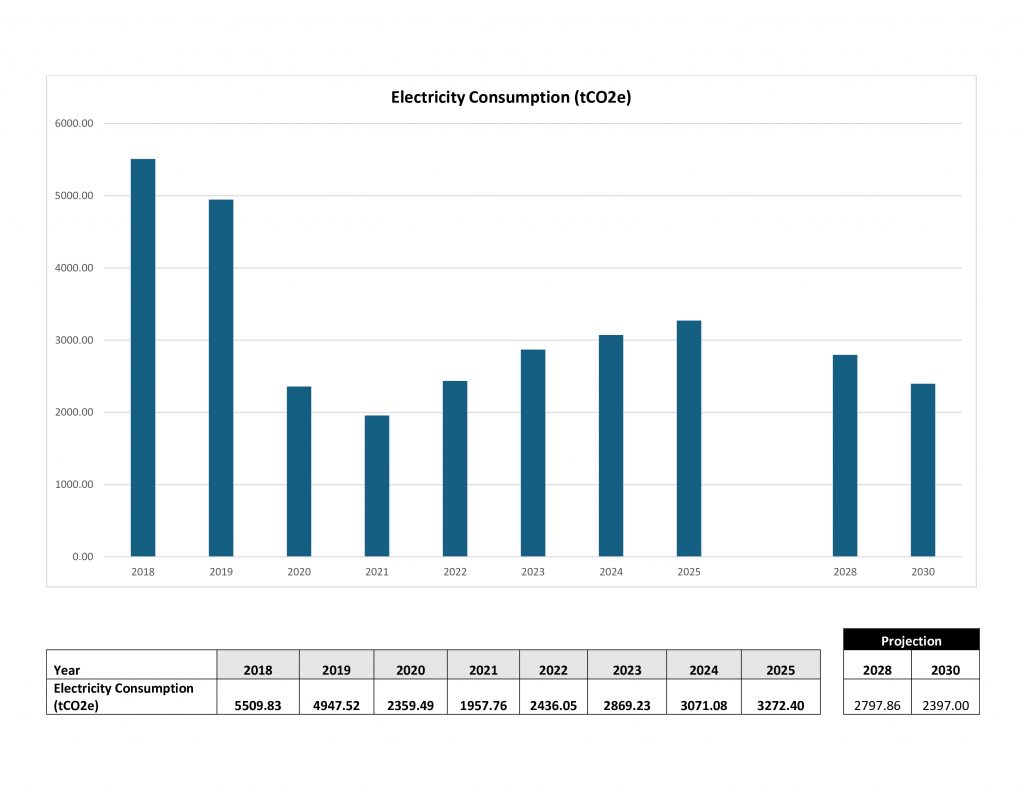
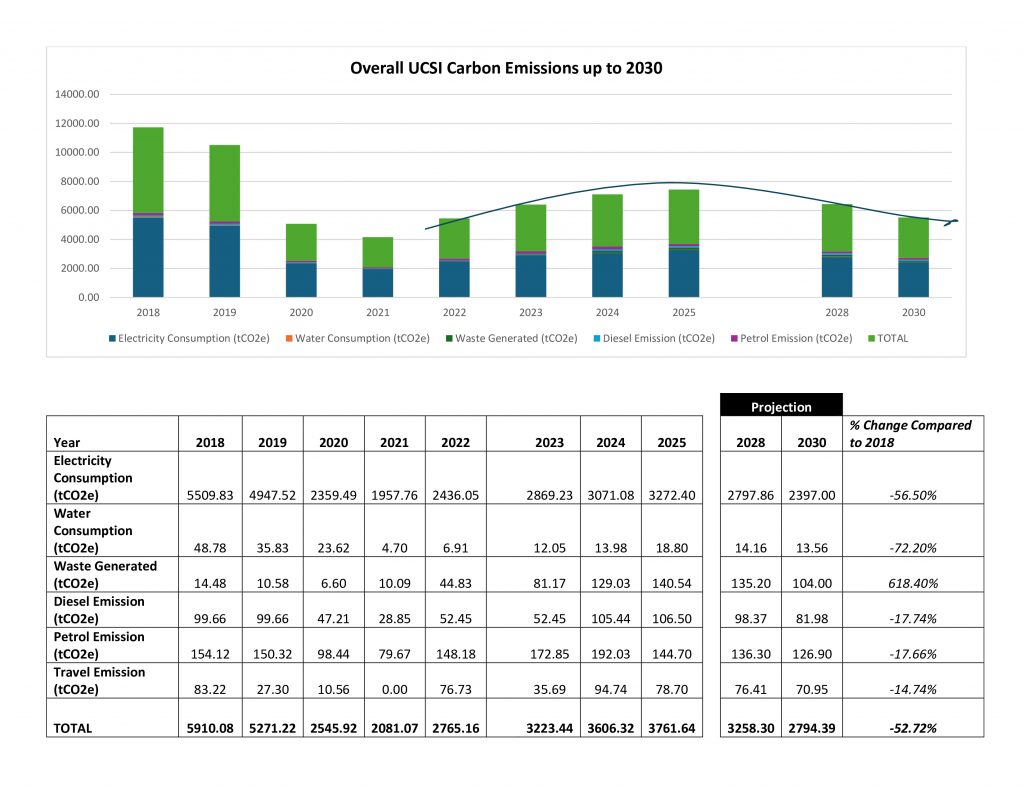
Electricity consumption saw a slight increase compared to the previous year. However, the increase is beginning to taper down. Plans are underway to install solar panels, aiming to achieve a reduction of 700,000 kWh in electricity consumption by 2027 . To complement this initiative, the Green Office Campaign will be intensified to promote sustainable habits among the campus community. Additionally, we plan to audit all high electricity-consuming machinery and devices on campus, with the intention of replacing them with energy-saving alternatives.
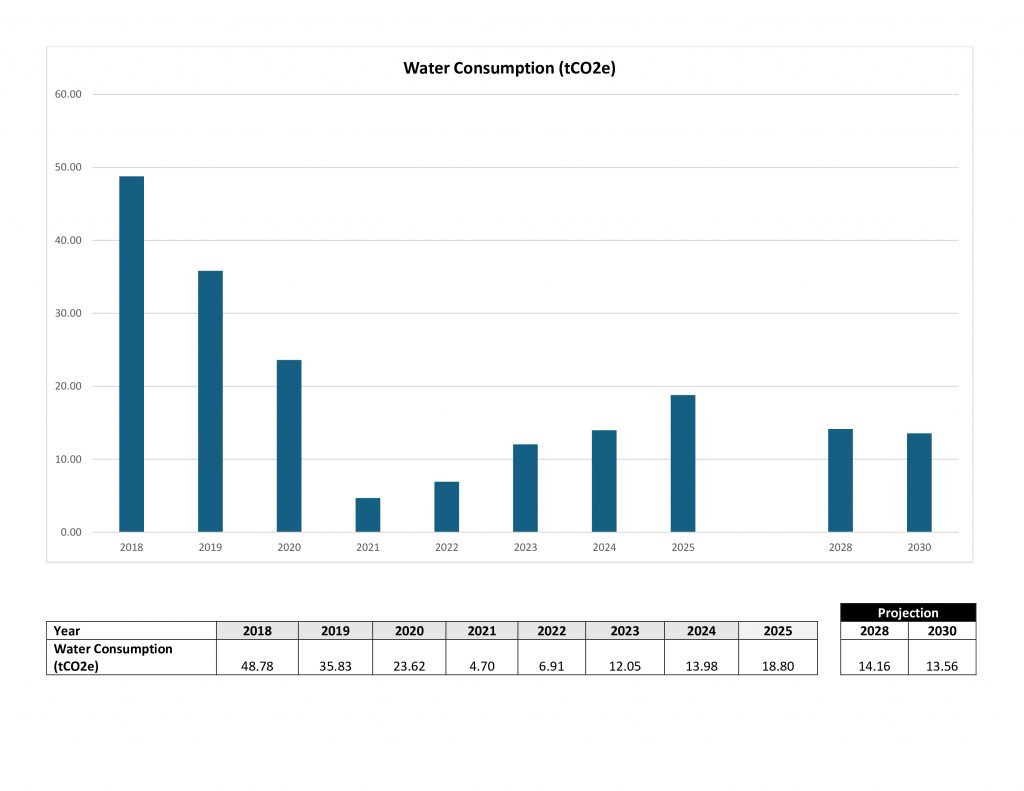
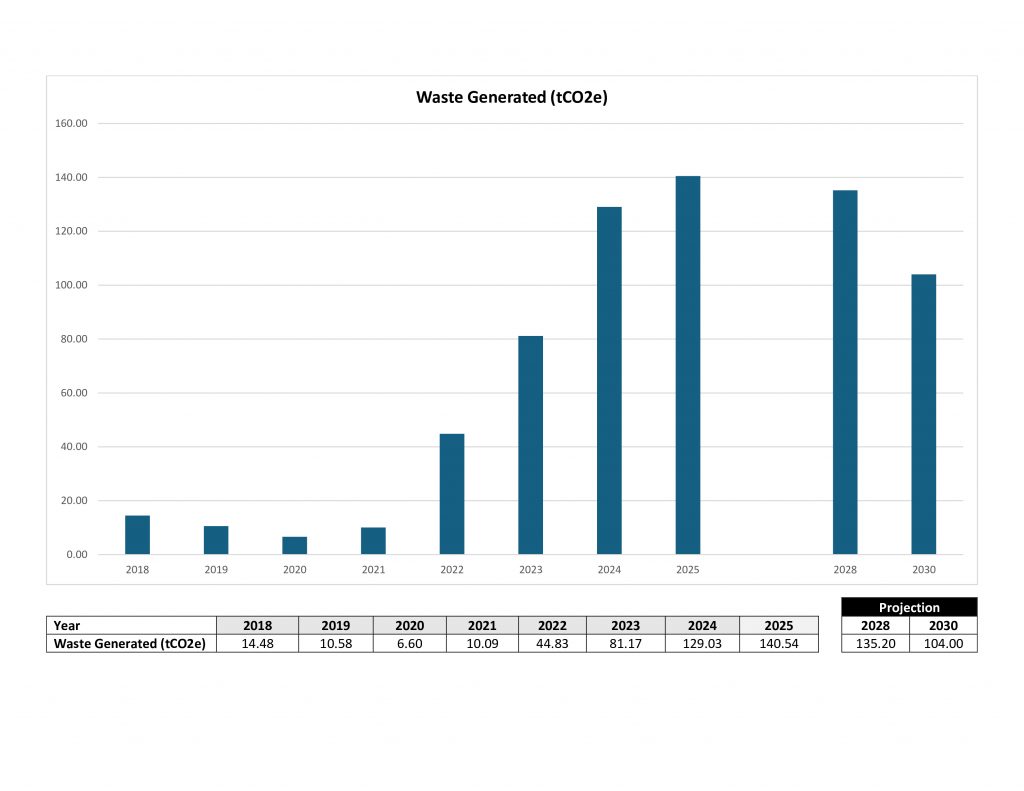
Water usage and waste disposal increased in parallel with the growth of the campus population. The monthly recycling programme in association with Riiicycle Tech, which started in the middle of 2025, has begun to show signs of tapering down on waste volume.The 6 months alone about 5 tonnes of wastes have been recycled, which evaded an equivalent of 14.5 tonnes of CO2. To build on this progress, the acquisition of a composting machine is being studied.
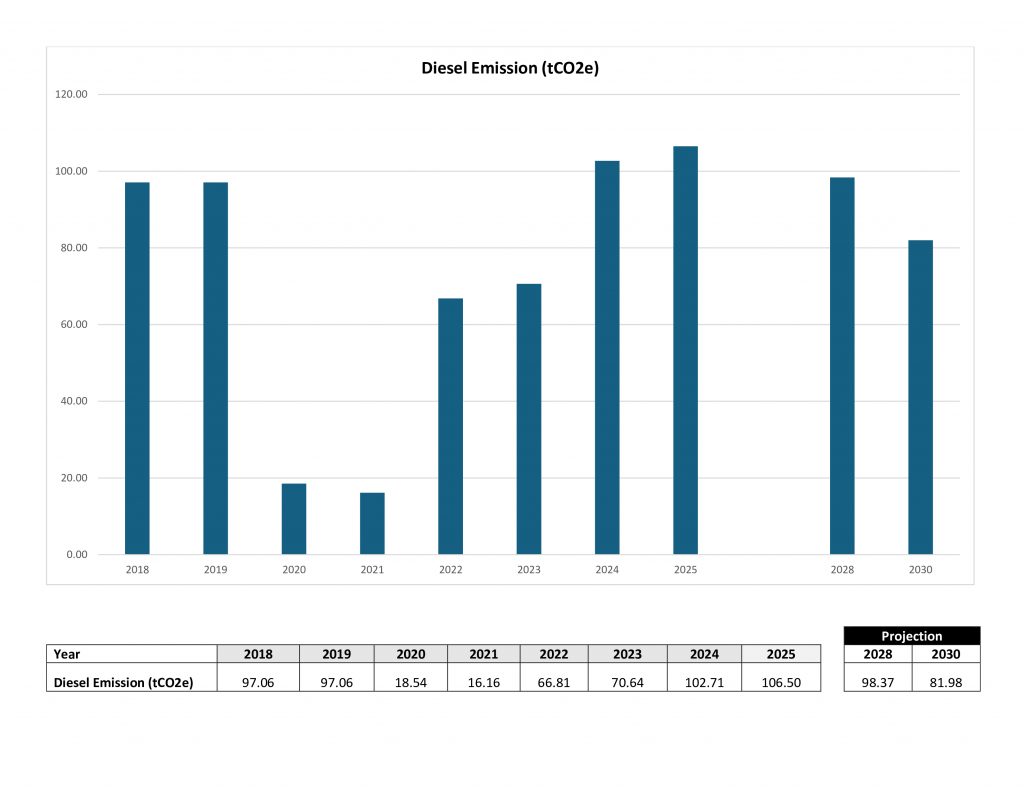
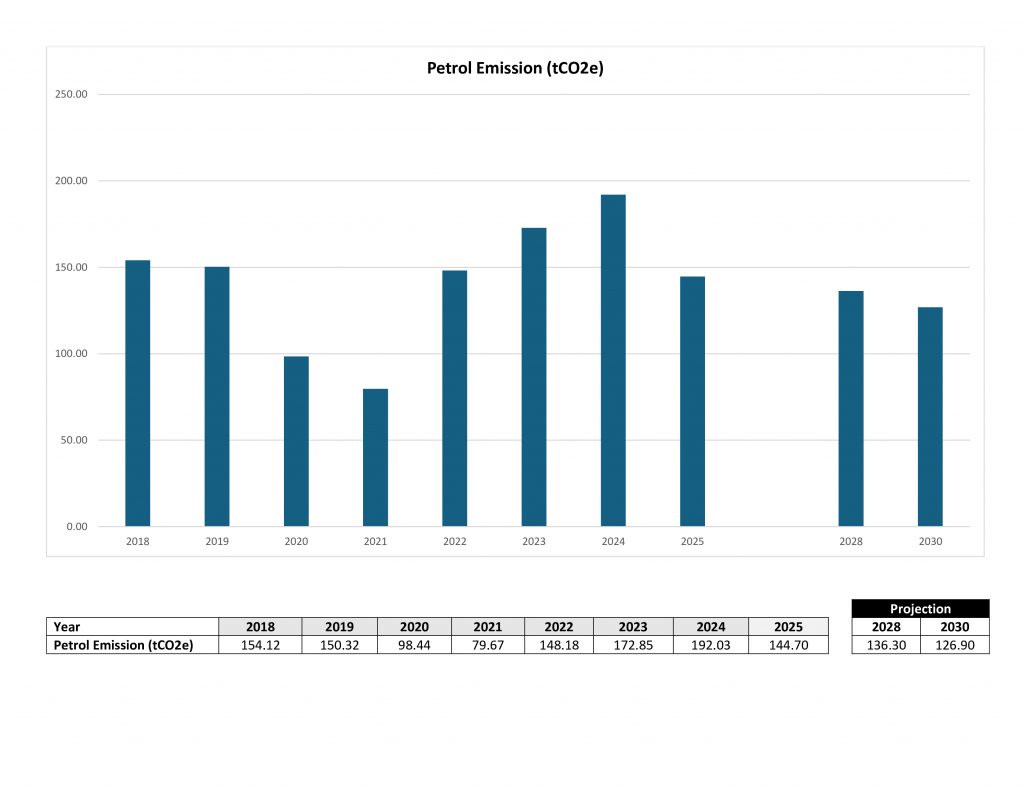
Campus buses were heavily utilised in 2025 for student field trips in addition to their regular shuttle routes, leading to a rise in diesel consumption. Meanwhile, Petrol Emission for company cars has slowed down due to having more EV and hybrid cars.
Total CO2e in 2025 increased slightly by 170 tonnes compared to the increase of 280 tonnes in 2024. Despite this, the institution remains committed to its long-term goal of reducing emissions more than 50% by 2030, compared to the baseline year of 2018. In addition, yet to be accounted for, the planting of 1,500 saplings has contributed to additional carbon sequestration.
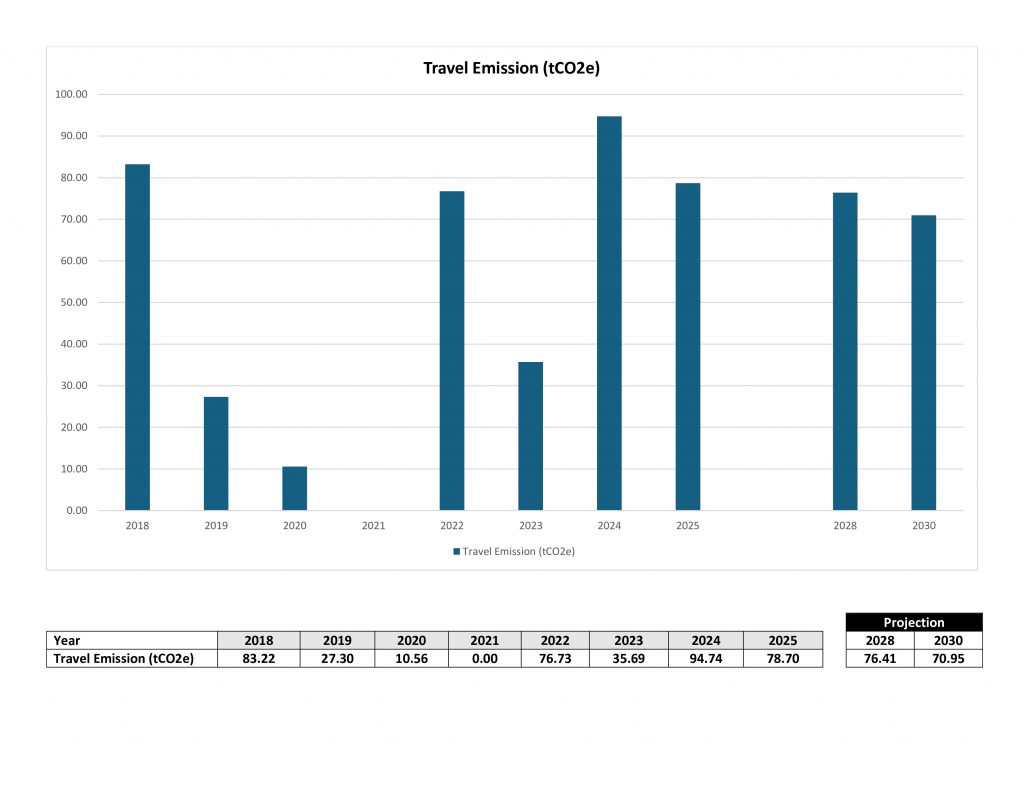
While there was still some increase in the overall eCO2 emission in 2025, the graph shows a good sign of tapering down over the years. The continued focus on renewable energy, waste management, green office campaign and sustainable transportation will be crucial in achieving the institution’s net zero commitment.
Partnership and Collaboration
UCSI University works with industry partners, government agencies and non-profit organisations to address sustainability challenges. Joint research, knowledge exchange and collaborative projects contribute to sustainable development at regional, national and international levels. The University’s stakeholder engagement policy brings diverse perspectives into decision-making, promoting transparency and inclusion. These partnerships extend the reach of its sustainability efforts beyond campus.
Engagement with Regional NGOs and Government Agencies on SDG Policy
- The University participates in, or contributes to, SDG policy development with national government agencies and regional non-governmental organisations (NGOs). This work includes identifying challenges, developing policies and strategies, modelling possible futures with and without interventions, and supporting adaptive management.
- Research evidence, modelling and practical experience help shape policies that are feasible, effective and informed by real-world conditions. The University also contributes to discussions on how the sustainable development agenda should evolve beyond 2030. This engagement helps it anticipate risks, respond to changing conditions and align its own strategies with national and regional priorities.
Cross-Sectoral Dialogue on the SDGs
- The University initiates and participates in cross-sectoral dialogue on the SDGs through conferences and forums involving government agencies, NGOs, industry and community stakeholders.
- Sustainability challenges require cooperation across sectors. Dialogue builds shared understanding, aligns priorities, brings tensions into the open and supports coordinated action. It also connects University expertise with decision-makers and practitioners who can scale up solutions.
Collaboration on SDG Best Practices
- Through international collaboration and research, the University compares approaches to sustainable development and develops international best practices for advancing the SDGs.
- Comparative research helps the University learn from successful approaches elsewhere, avoid repeating mistakes and adapt proven practices to local needs. It also enables the University to contribute to global knowledge and practice.
Collaboration with NGOs on the SDGs
- The University works with NGOs to advance the SDGs through public forums and discussions, student volunteering, research programmes and the development of educational resources.
- NGOs bring close community connections and an understanding of local contexts. These partnerships extend the University’s reach, ground research in lived experience and give students meaningful opportunities to learn and serve. They also strengthen civil society and community resilience.
Education for the SDGs
- The University is committed to integrating meaningful SDG education throughout its curriculum, making it relevant and applicable to all students.
- Sustainability literacy is a core competency for graduates entering a world shaped by climate change, inequality and resource constraints. Integrating the SDGs across disciplines helps students connect their fields to sustainable development and act responsibly in their careers and everyday lives.
Dedicated Programmes and Courses on Sustainability and the SDGs
- The University offers dedicated degree programmes and elective courses that address sustainability and the SDGs.
- These programmes and courses provide opportunities for deeper learning, critical thinking and specialised knowledge beyond introductory coverage. They prepare students for sustainability-focused careers, research and leadership, demonstrating the University’s commitment to sustainable development.
Education for the SDGs in the Wider Community
- The University provides educational outreach activities and environmental impact projects for the wider community, which may include alumni, local residents and displaced people.
- Community education raises awareness, builds local capacity and broadens access to sustainability knowledge. It strengthens community relationships and ensures that the University’s educational mission serves the public good.
Measuring Sustainability Literacy
- The University assesses students’ sustainability literacy through its annual Sustainability Quiz.
- Assessing students’ understanding and retention of key sustainability concepts helps the University evaluate teaching, identify learning gaps and refine its curriculum. This supports an evidence-based approach to SDG education and continuous improvement.




Sustainable Transportation
Our buildings are located within walking distance from each other, prioritising walkability within the campus to reduce reliance on fossil fuel-based transportation, assisted by pedestrian paths and zebra crossings. We encourage sustainable commuting options such as cycling, carpooling, and public transportation. We also have 3 buggy units to assist in mobility of those who need them. Our shuttle buses are on scheduled routine to stop at strategic locations including the main LRT terminal in serving the public commuters to our campus.
In our plan towards Net Zero Carbon target, we are phasing in electrical empowered vehicles to replace the traditional fuel-powered ones in the campus. Currently 20% of our vehicles are either full EV or hybrid.

Free buggy ride in campus

Shuttle buses

Zebra Crossings

Pedestrian paths
Sustainable Events and Conferences
We organise events and conferences with sustainability principles in mind. We emphasise waste reduction, promote eco-friendly practices such as digital communication and minimal paper usage, and prioritise venues that align with sustainable standards


Waste Reduction and Repurposing
UCSI University is committed to reducing waste and recovering resources across campus operations. Waste segregation, recycling partnerships, institutional policies and a culture of reuse help reduce its environmental footprint and encourage responsible consumption. Together, these efforts support the University’s wider sustainability agenda.
1. Waste Segregation for Recycling and Composting
2. Partnership with Riiicycle
3. No Single-Use Plastic Policy
The University is implementing its No Single-Use Plastic Policy in phases across campus, including among vendors and outsourced suppliers. The policy discourages disposable plastics such as cups, straws, cutlery and packaging, and encourages reusable alternatives. Reducing single-use plastics helps limit plastic pollution and landfill waste while promoting responsible habits among students, staff and vendors.
4. No Disposal of Single-Sided Paper Policy
The University’s No Disposal of Single-Sided Paper Policy prohibits discarding paper that has been used on only one side. It is retained for internal drafts, printing, note-taking and other suitable uses, and is disposed of or recycled only after both sides have been fully used. This reduces paper consumption, conserves resources and lowers the environmental impact of paper production and disposal.
5. Resource Sharing in the Office
Staff are encouraged to share stationery, cutlery and other commonly used office items. Shared access reduces unnecessary duplication, procurement demand and the volume of items discarded. It also encourages collaboration while reducing waste and reliance on disposable items at source.
6. Furniture Reuse and Repair
The University reuses old furniture and repairs damaged items wherever feasible. Furniture that remains functional or can be restored is repaired and redeployed rather than discarded. Extending its useful life reduces waste, conserves resources and lowers the environmental and financial costs of buying new furniture.
7. Regular Green Office Audits
Regular green office audits monitor and improve practices in energy efficiency, waste management and water conservation. They also ensure that each office has a paper recycling station and that staff know its location. The audits identify opportunities for improvement, reinforce compliance with sustainability policies and encourage staff participation in waste reduction.
8. Digital-First Communications and Events
The University encourages digital platforms for announcements, agendas and event materials. Paper handouts are discouraged, and paper use at events is kept to a minimum wherever possible. Digital-first communication reduces paper consumption, makes information easier to share and supports more efficient, sustainable events.
9. Waste Measurement and Reduction
The University measures the amount of waste sent to landfill and the amount recycled. It seeks to reduce landfill waste, improve recycling performance and continually strengthen campus waste management.
9. Waste Measurement and Reduction
The University is exploring a policy on the ethical sourcing of food and supplies. The proposed policy would incorporate environmental, social and ethical considerations into procurement decisions, supporting responsible consumption and the University’s broader sustainability commitments.
Waste Reduction and Repurposing

Waste Segregation

Recycling

Recycling Truck

Thrash for Cash Campaign

Waste to Value Collaboration
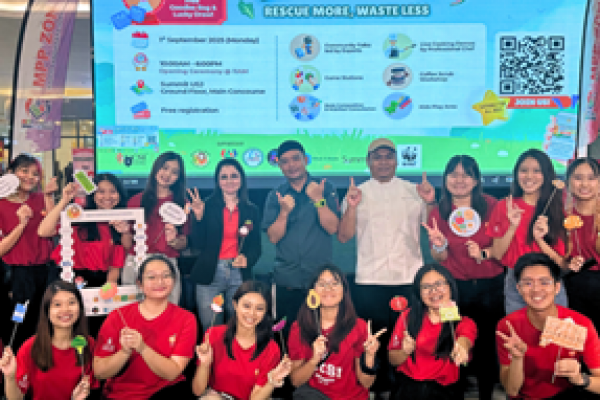
Food Rescue Project
Water Conservation
UCSI University recognises water as a vital, finite resource and is committed to using it responsibly across campus operations. Through existing initiatives and plans for further improvement, the University is reducing water consumption, encouraging reuse and protecting water quality. These efforts support its broader commitment to environmental sustainability and operational efficiency.
1. Water-Conscious Building Standards
Water-conscious building standards guide the design, construction and renovation of University facilities. By incorporating water-efficient fixtures, fittings and systems from the outset, the University seeks to minimise water use throughout its buildings.
2. Water Reuse Mechanisms
The University captures and redirects water for suitable secondary uses, reducing consumption and supporting a circular approach to water management. It continues to explore opportunities to expand and improve these reuse systems.
3. Rainwater Harvesting for Toilet Facilities
The University harvests rainwater for use in toilet facilities across campus. Using rainwater for non-drinking purposes reduces demand for treated potable water and eases pressure on the municipal water supply. Rainwater harvesting is a core part of the University’s water conservation strategy.
4. Chemical and Hazardous Waste Policy
The University maintains a strict chemical and hazardous waste policy to prevent polluted water from entering drainage and water systems. The policy requires hazardous substances to be handled, stored and disposed of in accordance with environmental regulations, protecting campus water systems and the wider environment.
5. Free Drinking Water Provision
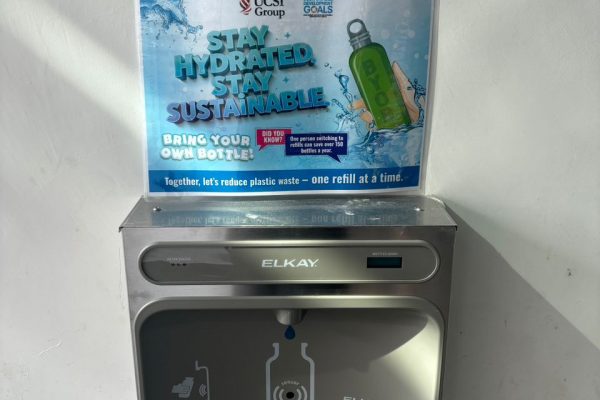
Drinking water fountains across campus provide students, staff and visitors with free drinking water. This encourages hydration and reduces demand for single-use plastic bottles, helping to lower the water and energy footprint associated with bottled water production and disposal.
6. Tap Restrictors in Toilets
Tap restrictors installed in toilet facilities regulate water flow and reduce wastage without compromising functionality. By reducing the water used each time a tap is turned on, these devices contribute to measurable savings in daily water consumption
7. Water-Conscious Planting and Landscaping
The University is exploring landscaping approaches that require less water, including the use of drought-tolerant plants. Selecting suitable species will help reduce irrigation needs while maintaining attractive, functional green spaces.
Water Conservation
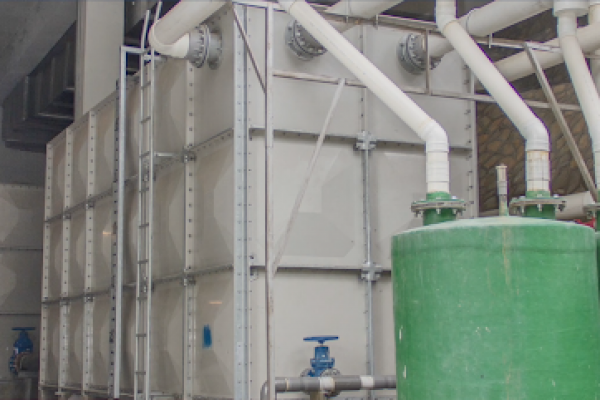
Rain Water Harvesting
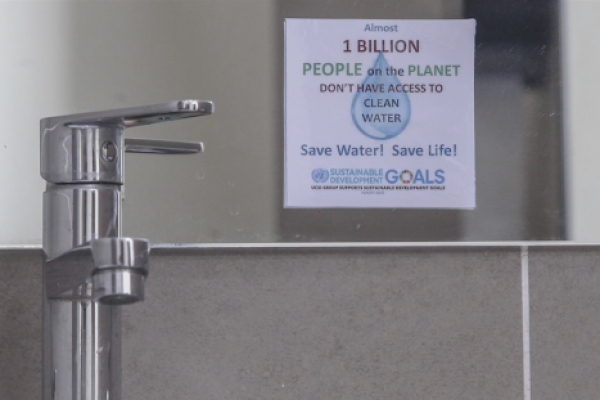
Save Water Remainder

Tap Restrictors
Social Sustainability and Equity
UCSI University recognises social sustainability and equity as essential to its mission, alongside environmental sustainability. It seeks to create an inclusive campus that respects and celebrates people of all backgrounds, regardless of age, religion or belief, race, social standing, nationality, gender, sexuality, disability or refugee status. Its commitment to social justice, fair labour practices, gender equality and equal access to education ensures that sustainability includes social wellbeing.
Accessibility and Disability Inclusion
Student Support and Sustainability Funding
Harmoni-Mesra Campus
Labour and Employment Practices
Gender Equality and Family Support
Admissions, Non-Discrimination and Support